Heroic Secret Service Agents Neutralize White House Gunman in a Breathtaking Display of Bravery — Full Story of the May 23, 2026 Shooting
Meta Description: White house shooting, Secret Service agents heroically stopped a gunman who opened fire at the White House checkpoint on May 23, 2026. Get the full story — what happened, who the suspect was, how the brave agents responded, and what it means for White House security.
Published: May 24, 2026 | Category: U.S. News | Breaking News | Reading Time: 13 minutes
Table of Contents
- What Happened: The White House Shooting of May 23, 2026
- The Heroic Secret Service Response
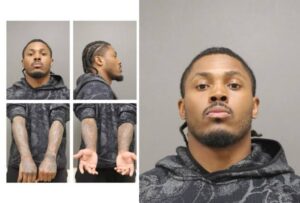
- Who Was the Suspect? Nasire Best Identified
- President Trump’s Location and Reaction
- The Scene Outside the White House: Eyewitness Accounts
- White House Lockdown: How It Unfolded
- Third Incident Near Trump in a Month: A Troubling Pattern
- Political Reaction: Praise for Law Enforcement Pours In
- The FBI Steps In: What Investigators Are Looking At
- White House Security: What Experts Say Must Change
- The Extraordinary Bravery of the Secret Service: By the Numbers
- Final Thoughts: A Nation Grateful for Its Guardians
What Happened: The White House Shooting of May 23, 2026 {#what-happened}
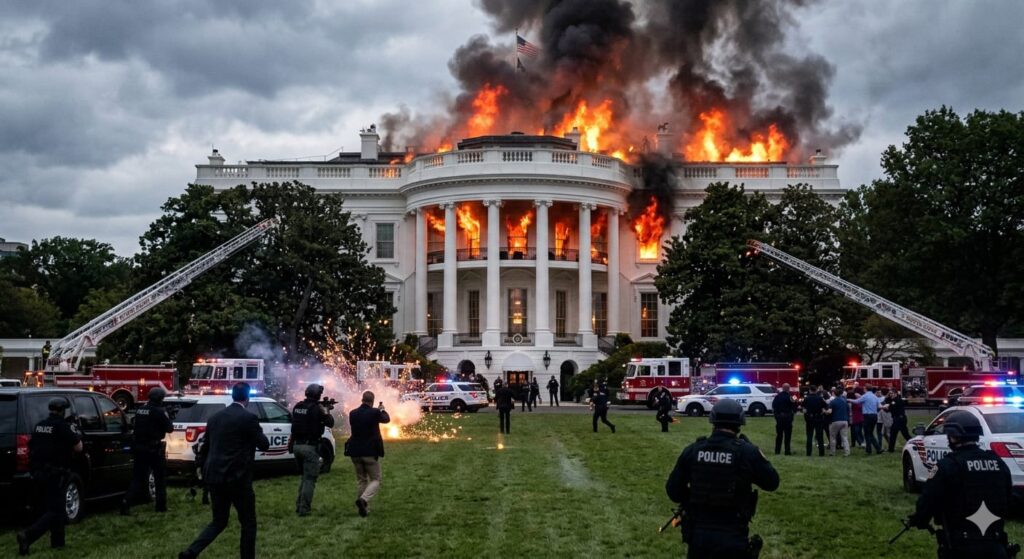
In one of the most alarming security incidents in recent American history, a gunman opened fire at a Secret Service checkpoint just outside the White House on the evening of Saturday, May 23, 2026. What could have been an unthinkable tragedy was prevented entirely by the swift, decisive, and courageous response of the United States Secret Service — agents who ran toward the danger and neutralized the threat before it could reach the President or any member of the White House staff.
On May 23, 2026, a 21-year-old man named Nasire Best opened fire at a security booth just outside the White House complex in Washington, D.C., before being fatally shot by the United States Secret Service. A bystander was also injured and is in critical condition.
The shooting occurred shortly after 6 p.m. EDT, when the man was in the area of 17th Street and Pennsylvania Avenue, pulled a weapon from his bag, and began firing. The location — one of the most heavily patrolled intersections in the world — ensured that the Secret Service was immediately on the scene.
Somewhere between 15 and 30 gunshots were fired during the incident. Two people were wounded — the suspect and a possible bystander — both of whom were taken to an area hospital. The suspect was in critical condition, and the second person was in serious condition. Several Secret Service officers were evaluated at the scene, but none were hospitalized.
The speed and precision of the Secret Service response meant that what could have been a catastrophic attack on the nation’s most iconic building ended with the President safe, the agents unharmed, and the threat eliminated. It was a moment that underscored the extraordinary capability of America’s elite protective force.
The Heroic Secret Service Response {#heroic-response}
When Nasire Best pulled the weapon from his bag and opened fire on the officers stationed at the 17th Street checkpoint, the Secret Service did exactly what they train to do every single day — they responded with speed, courage, and lethal precision.
Secret Service agents returned fire and struck the suspect, who was taken to a local hospital where he later died. The entire exchange, while terrifying for bystanders and journalists nearby, was resolved before the gunman could penetrate the White House perimeter.
What makes this response so remarkable is the environment in which it happened. Pennsylvania Avenue near the White House is one of the busiest areas of Washington, D.C. — a stretch regularly filled with tourists, journalists, and pedestrians. It appears that Secret Service agents were shot at unsuccessfully and returned fire. Despite the chaotic nature of an active shooter situation in an open urban environment, the agents managed to neutralize the threat without any of their colleagues sustaining gunshot wounds.
House Speaker Mike Johnson, R-La., commended the federal response to the active shooter near the White House Saturday evening. “We are grateful for our brave Secret Service agents who took quick, decisive action to protect President Trump, and our prayers are with the victims of tonight’s senseless shooting for a speedy recovery,” Johnson wrote on X. “Our law enforcement officers run into harm’s way each day to keep us safe, and they deserve our unwavering support,” he added.
The agents’ instinctive, drilled response — protect the perimeter, return fire, assess casualties — is the product of hundreds of hours of annual training. This is the Secret Service operating at exactly the level the American people expect and depend on.
Who Was the Suspect? Nasire Best Identified {#suspect-identified}
In the hours following the incident, law enforcement sources began piecing together the identity and background of the gunman. The suspect was identified as 21-year-old Nasire Best. According to the source, Best had a previous run-in with Secret Service in July 2025 in which he tried to gain entry to the White House.
Reuters reports he was an emotionally disturbed person who previously had been under a “stay-away order,” according to a law enforcement source.
Best was from an unspecified D.C.-area town in Maryland and was taken to George Washington University Hospital following the shooting.
The president posted on social media after midnight early Sunday morning, thanking Secret Service and law enforcement for their work and noting the gunman had what he called a “violent history and possible obsession” with the White House.
The profile that emerges is troubling — a young man with a documented history of attempting to breach White House security, who had already been placed under a stay-away order, and who nevertheless managed to arrive at a heavily guarded checkpoint armed and ready to fire. The fact that the Secret Service still responded so effectively, despite the suspect having a prior history that should have put him on the highest watch lists, raises important questions about how threat intelligence is being actioned at the operational level.
A possible motive in Saturday’s shooting was not immediately clear. Investigators are expected to review Best’s communications, social media activity, and any manifesto or materials he may have left behind. The FBI is leading the investigation alongside the Secret Service.
President Trump’s Location and Reaction {#trump-reaction}
President Trump was inside the White House at the time of the shooting, working to negotiate a deal with Iran. The fact that the most powerful man in the world was at his desk doing the nation’s business at the exact moment a gunman opened fire outside his residence is a sobering reminder of the constant threat environment that every modern American president inhabits.
A White House official confirmed the Secret Service briefed Trump about the incident. In a post on Truth Social early Sunday morning, Trump thanked Secret Service and law enforcement for their actions to stop the gunman and reiterated his call for building “the most safe and secure space of its kind,” likely a reference to the White House ballroom project.
Trump’s response was measured and grateful. Rather than escalating the political temperature around the incident, the President chose to use the moment to praise the men and women who protect him daily — a recognition of the extraordinary service they provide.
Trump also mentioned last month’s White House Correspondents’ Dinner shooting and said Saturday’s incident underscores his desire for “the most safe and secure space of its kind ever built” in Washington.
The President was never in direct physical danger during the incident — a testament to the multiple layers of security that separate the Oval Office from the perimeter checkpoints. But the psychological weight of knowing that someone is willing to open fire in the direction of your home is a reality that few Americans will ever fully comprehend.
The Scene Outside the White House: Eyewitness Accounts {#eyewitness}
The area around Pennsylvania Avenue on a Saturday evening is rarely quiet — and on May 23, 2026, it became the center of one of the most dramatic security incidents the nation’s capital has witnessed in years.
The shots were caught on video by various White House correspondents, including journalists from ABC News and CBS News. The footage shows the immediate chaos that followed the first shots — pedestrians scattering, security personnel rushing to secure the perimeter, and the rapid mobilization of law enforcement from multiple agencies.
Reporters inside the White House press briefing room found themselves in lockdown, watching events unfold through their windows while sending updates to their newsrooms. The moment captured in news photographs — journalists pressing their phones to windows, Secret Service agents crouching and scanning — became one of the defining images of a shocking Saturday evening in Washington.
Within minutes, law enforcement had sealed off the surrounding blocks. Members of the media were cleared from the North Lawn of the White House following reports of gunfire. The efficiency with which the scene was secured — an enormous area involving multiple intersecting streets in one of the world’s most visited cities — is another reflection of the extraordinary training and preparation of the agencies involved.
White House Lockdown: How It Unfolded {#lockdown}
The moments immediately following the first shots were a test of the White House’s emergency protocols — protocols that were executed with impressive efficiency.
A lockdown was placed on the White House complex the instant shots were confirmed. Personnel inside — including journalists, staff, and the President himself — were secured. Exits were sealed. The Secret Service Command Post was immediately activated. Law enforcement from the Metropolitan Police Department, the U.S. Park Police, and federal agencies converged on the scene within minutes.
FBI Director Kash Patel reported that operatives are assisting the Secret Service. The rapid multi-agency coordination reflects years of joint training exercises and protocols designed for exactly this kind of scenario.
The lockdown at the White House was lifted, and the press was allowed back on the White House North Lawn once authorities confirmed that the threat had been neutralized and the perimeter was secure. From the first shot to the lifting of the lockdown, the entire incident was contained with a speed and professionalism that speaks volumes about the quality of America’s premier protective service.
Third Incident Near Trump in a Month: A Troubling Pattern {#pattern}
It was the third incidence of gunfire in the vicinity of President Donald Trump in the past month. That statistic alone demands serious examination.
The incident was the third apparent attempt on Trump’s life since 2024, following the July 2024 attempt near Butler, Pennsylvania, and the September 2024 attempt at Trump’s golf club in West Palm Beach, Florida.
The April 25, 2026 White House Correspondents’ Dinner shooting at the Washington Hilton was the most recent prior incident. In that case, a suspect named Cole Tomas Allen fired shots near the main security screening area for the event, injuring one officer — who was protected by a bullet-resistant vest.
The frequency of these incidents is unprecedented in recent American political history. Security experts have pointed to a heightened atmosphere of political polarization, combined with the increased visibility of high-profile political targets in public and semi-public settings, as contributing factors. What remains constant through every one of these incidents is the remarkable response of the law enforcement professionals who stand between the President and those who wish him harm.
That no Secret Service agent has been killed in any of these encounters is not luck. It is the direct result of the highest-level training, preparation, and professionalism in the world.
Political Reaction: Praise for Law Enforcement Pours In {#political-reaction}
The political response to the May 23 shooting was swift and bipartisan in its praise for the law enforcement response.
House Speaker Mike Johnson wrote: “We are grateful for our brave Secret Service agents who took quick, decisive action to protect President Trump, and our prayers are with the victims of tonight’s senseless shooting for a speedy recovery. Our law enforcement officers run into harm’s way each day to keep us safe, and they deserve our unwavering support.”
Across party lines, elected officials took to social media to condemn the violence and praise the response. The consensus was clear: whatever divides Washington politically, the men and women who protect the White House deserve the full support and gratitude of the American people.
Trump’s own response on Truth Social was among the most widely shared, with the President striking a tone of gratitude toward law enforcement while also reigniting discussion about White House security infrastructure. His reference to wanting to build “the most safe and secure space of its kind” suggests that the administration is already thinking seriously about how to upgrade the physical security of the White House complex in the wake of multiple incidents.
The FBI Steps In: What Investigators Are Looking At {#fbi-investigation}
With Nasire Best now deceased, the investigation shifts entirely to understanding his motivations, his preparation, and whether he acted alone.
The Secret Service said in a statement posted on X that the man was in the area of 17th Street and Pennsylvania Avenue when he “pulled a weapon from his bag” shortly after 6 p.m. EDT and began firing.
Investigators will examine several key questions:
How did Best obtain his weapon? Given his documented history with law enforcement and his status as an “emotionally disturbed person” under a stay-away order, questions will immediately arise about the circumstances under which he was able to acquire a firearm and transport it to the White House checkpoint.
Was there a specific target or motive? The president noted the gunman had a “violent history and possible obsession” with the White House. Whether Best was targeting the President specifically, or whether his fixation was on the White House as a symbol, will be central to the investigation.
Were there warning signs that were missed? His July 2025 attempt to gain entry to the White House and his subsequent stay-away order suggest that there was awareness of his behavior within the system. Investigators will need to determine whether additional intervention could have prevented Saturday’s attack.
Was there any coordination or communication with outside parties? In the current security environment, investigators will examine Best’s digital footprint — social media, messaging apps, communications — for any evidence of external influence or planning assistance.
White House Security: What Experts Say Must Change {#security-analysis}
The May 23 shooting has reignited a national conversation about the adequacy of White House security — a topic that comes up with painful regularity after incidents like this one.
The current security perimeter around the White House involves multiple layers: a reinforced fence, vehicle barriers, uniformed Secret Service officers at checkpoints, plainclothes agents, and an elaborate network of surveillance technology. The checkpoint at 17th Street and Pennsylvania Avenue where Saturday’s shooting occurred is one of the most visible and heavily staffed in the entire complex.
And yet a young man with a documented history of threatening behavior and a standing stay-away order was able to walk up to that checkpoint with a weapon concealed in a bag. This raises questions that security experts will be examining carefully in the days ahead.
Among the likely areas of focus: intelligence-sharing between federal agencies and local law enforcement; the protocols for flagging and monitoring individuals with prior White House security incidents on their record; the use of technology — particularly AI-enhanced threat detection and facial recognition — at perimeter checkpoints; and the physical design of checkpoints themselves, including whether greater standoff distance from civilian pedestrian areas is possible.
Trump mentioned last month’s White House Correspondents’ Dinner shooting and said Saturday’s incident underscores his desire for “the most safe and secure space of its kind ever built” in Washington. That ambition — whatever form it ultimately takes — reflects a recognition at the highest level of government that the current infrastructure, while impressive, has faced its limits.
The Extraordinary Bravery of the Secret Service: By the Numbers {#secret-service-bravery}
It is worth pausing to fully appreciate what the Secret Service accomplished on the evening of May 23, 2026.
A gunman — who had already demonstrated a history of hostile intent toward the White House — arrived at a security checkpoint, concealed a weapon in a bag to evade early detection, and opened fire in the direction of officers in a public area. Between 15 and 30 shots were fired. And when the exchange of gunfire ended, not a single Secret Service agent had been shot.
This is not a coincidence. It is the result of one of the most rigorous training programs in the world.
The U.S. Secret Service trains its agents in advanced firearms proficiency, threat assessment, emergency medicine, and protective operations. Uniformed Division officers — the personnel stationed at perimeter checkpoints — undergo continuous training specifically designed for the kind of attack that occurred on May 23. They train for ambush scenarios. They train for concealed weapon draws. They train for active shooter situations in public spaces where civilians may be present.
The institutional knowledge built over more than a century of protecting American presidents is on display every time an agent reacts in a fraction of a second and keeps the commander-in-chief safe. Saturday evening was another moment in that long and honored tradition.
The bystander who was injured — whose condition remained serious as of Sunday morning — is a painful reminder that in any public attack, innocent people can be caught in the crossfire through no fault of their own. The nation holds this individual, and their family, in its prayers.
Final Thoughts: A Nation Grateful for Its Guardians {#conclusion}
The events of May 23, 2026, at the White House checkpoint on 17th Street and Pennsylvania Avenue will be studied, debated, and analyzed for weeks to come. Investigations will be launched. Security reviews will be ordered. Political leaders will make speeches. Experts will offer recommendations.
But when the noise fades, what will remain is a straightforward truth: on a Saturday evening in Washington, a young man with a weapon and a history of threatening behavior walked up to a security checkpoint and tried to do something terrible. And the men and women of the United States Secret Service — trained, alert, brave, and unwavering — stopped him.
President Trump was safe. No officers were hospitalized. The lockdown was lifted. The press was allowed back on the North Lawn. Life at the White House resumed.
That is the story of May 23, 2026. Not a story of failure or fear — but a story of extraordinary professionals doing their jobs with the kind of courage that most of us will never fully understand.
America has heroes. They stand guard every day, at every checkpoint, outside the People’s House. And on Saturday evening, they proved once again why the United States Secret Service is the finest protective security force in the world.
This article will be updated as new details emerge from the investigation. Bookmark this page for the latest White House security news and analysis.
Tags: White House shooting 2026, Secret Service shooting May 23 2026, Nasire Best White House, White House security incident, Secret Service heroism, Trump White House shooting, Washington DC shooting 2026, White House lockdown, Secret Service bravery, US Secret Service
Related Articles:
- White House Correspondents’ Dinner Shooting April 2026: Full Story
- Inside the U.S. Secret Service: How America’s Elite Protective Force Trains
- White House Security: A Complete History of Perimeter Breach Attempts